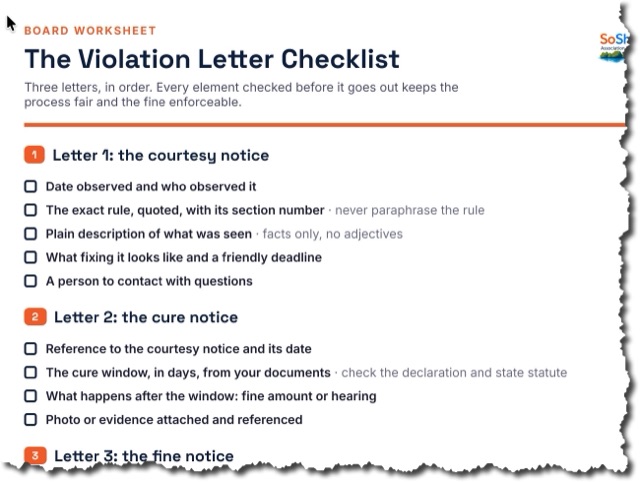
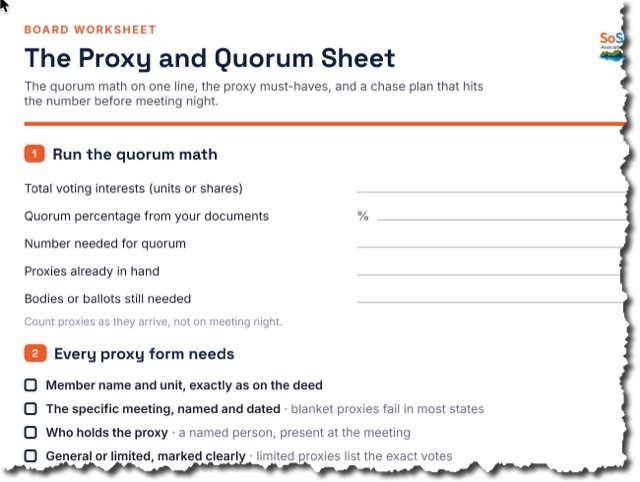

Free 2-page printable cheat sheet for New York community-association boards. Save as PDF using your browser’s print → PDF option.

← Back to New York statutes
SoShiny
soshiny.com/newyork
Page 1 of 2
Last updated: June 4, 2026

New York Co-op & Condo Statute Quick Reference

A board member’s plain-English cheat sheet for the patchwork of statutes governing New York condos, cooperatives, and HOAs — the Not-for-Profit Corporation Law (NPC), Real Property Law (RPL), Real Property Actions Law (RPA), and the Martin Act offering-plan rules under General Business Law (GBS).

NPC — Not-for-Profit Corporation Law

  • §602By-laws — required content for every NY nonprofit corporation, which includes most condo and co-op associations.
  • §603Meetings of members — annual meeting required, frequency and time set in the bylaws.
  • §605Notice of meeting — 10 to 50 days before any members meeting; mailed or delivered to record holders.
  • §608Quorum at meeting of members — bylaws set the threshold; statutory default applies when bylaws are silent.
  • §621Books and records; right of inspection — members may inspect with a written demand stating purpose.

RPL — Real Property Law (condominium specifics)

  • §339-uBy-laws — how condo by-laws are adopted and amended.
  • §339-vContents of by-laws — mandatory elements: board structure, meeting rules, voting, common-charge collection.
  • §339-iCommon interest — each unit’s undivided interest in the common elements; drives voting weight and assessment math.
  • §339-aaLien for common charges — lien duration and foreclosure procedure for unpaid assessments.
  • §339-wBooks of receipts and expenditures — financial records the board must keep and make available to unit owners.

GBS — General Business Law (Martin Act)

  • §352-eReal estate syndication offerings — the offering plan that must be filed with the NY Attorney General before sponsor units can be sold.
  • §352-eeeConversions to cooperative or condominium ownership — rental-to-co-op conversion requirements (eviction plans).
  • §352-eeeeNon-eviction conversion plans — the most common path for co-op/condo conversion; protects existing tenants.
Why three statutes at once?: New York governs community associations across three statutes simultaneously. The NPC handles the corporate body (members, directors, bylaws). The RPL handles condo-specific property law (common interest, liens, by-law contents). The GBS handles offering plans for sponsor sales and conversions. Co-ops add a fourth dimension: shareholders own corporate shares, not real estate.
Prepared by So Shiny Software, LLC · Daytona Beach, FL · soshiny.com
General information only — not legal advice. Verify current statutory text with the official source.
QR code linking to soshiny.com/newyork
soshiny.com/newyork
SoShiny
New York board meeting checklist
Page 2 of 2
Last updated: June 4, 2026

New York Board Meeting Checklist

Notice, quorum, records, and member rights — the operational essentials for a New York condo, co-op, or HOA board. All citations are to the New York statutes; confirm against your governing documents.

Notice Requirements by Meeting Type

  • Members meeting10 to 50 days written notice to every record holder (NPC §605). Notice states time, place, and purpose for any vote.
  • Special meetingSame 10-to-50-day window as the annual meeting; purpose must be stated and only that purpose can be acted on (NPC §605).
  • Board meetingNotice as set in the bylaws (NPC §711). Most NY associations require at least 48 hours for regular board meetings; emergency exceptions allowed.
  • Waiver of noticeNotice can be waived in writing before or after the meeting (NPC §606). Attendance alone counts as waiver unless the member objects at the start.
  • Action without meetingMembers can act by unanimous written consent (NPC §614); directors can act by unanimous written or electronic consent (NPC §708).

Quorum & Voting

Condo (NPC + RPL)

  • Members quorum set by bylaws under NPC §608
  • Directors quorum set by bylaws under NPC §707; majority of directors is the statutory default
  • Voting weight = common-interest percentage (RPL §339-i) unless bylaws differ
  • Proxies permitted (NPC §609) with written authorization

Co-op (NPC + share certificate)

  • Voting is by shares allocated to each unit
  • Quorum + voting rules in NPC §608, §613; bylaws fill in the specifics
  • Proxies permitted (NPC §609); cumulative voting only if bylaws allow
  • Sponsor unit voting limited under NPC §612 once conversion completes

Records, Minutes & Disclosures

  • MinutesRequired to record motions, votes, and quorum (NPC §621). Members have inspection rights with written demand stating purpose.
  • Books of receiptsCondos must keep books of receipts and expenditures available to owners (RPL §339-w); the same fiduciary duty applies to co-ops via NPC §717.
  • Right of inspectionMembers may inspect books and records under NPC §621 with a written demand. Refusal can trigger a court order plus statutory damages.
  • Annual financialNPC §519 requires the corporation to make an annual report available; offering-plan-era buildings also have AG disclosure obligations under GBS §352-e.
When you need a specific section: scan the QR below or visit soshiny.com/newyork. Every section of NPC, RPL, RPA, and the Martin Act provisions is plain-English-summarized with the official source link, related sections, and a board-ready FAQ.
Prepared by So Shiny Software, LLC · Daytona Beach, FL · soshiny.com
General information only — not legal advice. Verify current statutory text with the official source.
QR code linking to soshiny.com/newyork
soshiny.com/newyork

Run your New York community on a platform built around these statutes. Every feature on every plan, $50/month base + $0.50/unit. No contract.

Start free Browse all NY statutes

Want a Quick Reference Card for a different state? Email success@soshiny.com — we’ll add it.