
HOA Budgets and Reserves in Plain Language


Ask ten owners what their assessment pays for and you will get ten shrugs. Yet the annual budget is the single most consequential document a board produces. It sets what every owner pays and whether the roof gets replaced with savings or with a five-figure special assessment. Here is how it actually works.
Two buckets: operating and reserves
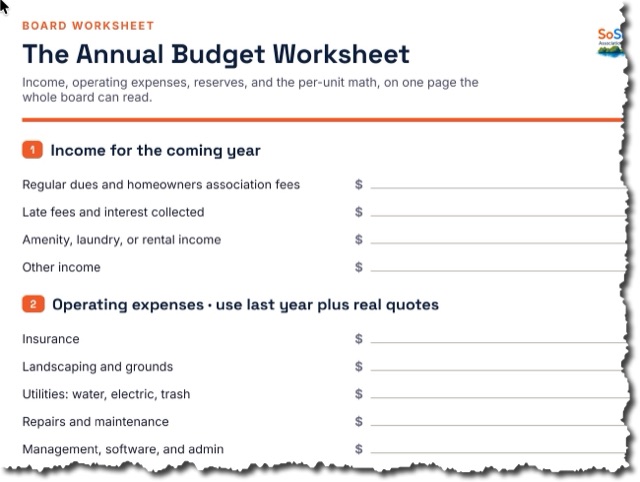
Every association budget is really two budgets. The operating budget pays for the year in front of you: insurance, landscaping, management, utilities, the pool chemicals. The reserve budget saves for the expensive days you can see coming: roofs, paving, painting, elevators. Operating money is spent and replaced every year. Reserve money accumulates for a decade and then disappears in one contractor invoice. Confusing the two, or quietly borrowing from one for the other, is where associations get hurt.
How the numbers get set
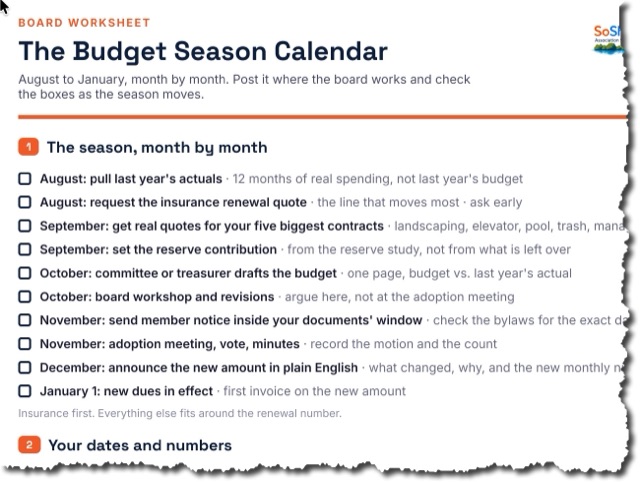
A sound budget is built from evidence, not last year plus three percent. For operating lines, that means actual contracts and a hard look at insurance, which has moved violently in Florida. For reserves, it means knowing three numbers for every major component: what it costs to replace, how many years of life remain, and what is saved so far. Divide what is still needed by the years remaining and you have the annual reserve contribution. Do that for every component and the budget writes itself. That exercise, formalized, is a reserve study.
Why underfunding is the expensive choice
Skipping reserve contributions feels like keeping assessments low. It is actually a loan from the future at terrible terms. When the roof fails, the money is raised as a special assessment from whoever owns units that year. That includes buyers who paid full price on the strength of low-looking assessments. Florida's post-Surfside reforms sharply tightened reserve and inspection expectations for condominiums under Chapter 718. HOAs under Chapter 720 have more flexibility, but the arithmetic is identical. Fully funded reserves are the cheapest money your community will ever have.
The transparency that prevents revolts
Most budget fights are information fights. Owners who see the reserve schedule (this roof, this year, this much saved) vote for boring, steady funding. Owners who see only a number going up assume waste. So publish generously:
- The proposed budget with last year beside it, line by line
- The reserve schedule in plain terms ("Roof: replace ~2031, $180,000, 62% funded")
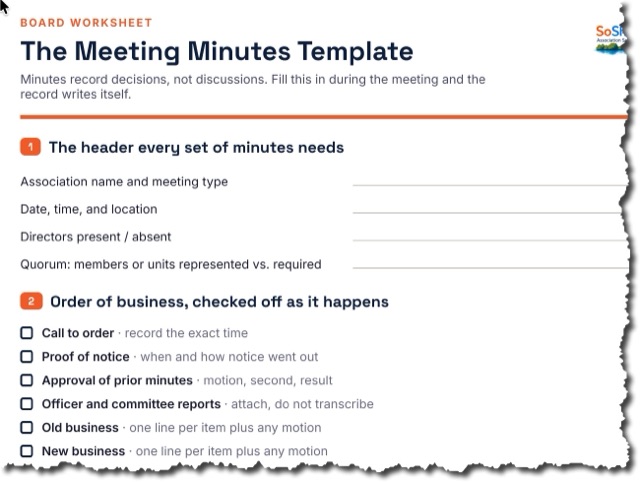
- Meeting notice on time, minutes afterward, and the adopted budget where every owner can find it
This is the quiet case for a community portal: budgets, election notices, and enforcement records all live where members can self-serve, and the board stops being the bottleneck: documents, announcements, votes, and printed letters in one place.
Special assessments and where the money sits
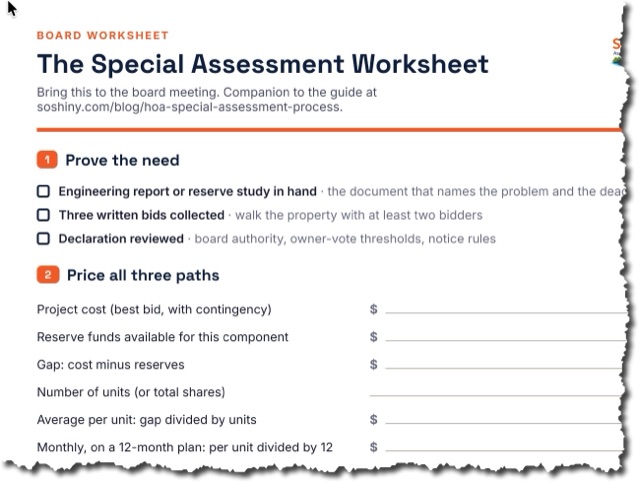
When reserves fall short, the gap gets closed with a special assessment, a one-time levy that requires proper notice, a stated purpose, and (check your documents) sometimes a membership vote. Two rules keep special assessments defensible: the money must be spent on the stated purpose, and anything left over gets credited back or, where permitted, rolled into reserves by the documented process. It never gets quietly absorbed. On the banking side, keep operating and reserve funds in separate accounts, reconcile monthly, and have two signers on anything that moves reserve money. Small associations skip this, "we all trust Carol," and small associations are where the embezzlement stories come from. Trust the person, keep the controls.
One more habit worth stealing from well-run communities: publish a simple mid-year budget-versus-actual. Three columns, budgeted, spent, difference, posted to the portal in July. It takes twenty minutes, and it converts the annual meeting from an ambush into a formality. Owners have watched the money all year.
A one-hour annual checklist
- Reconcile reserves against the schedule. Are you where the plan said you would be?
- Re-quote the three biggest operating lines (insurance first).
- Update component ages after any major repair.
- Publish the draft, hold the meeting, record the vote, file everything.
SoShiny is $25/month plus 33 cents a unit for every feature, and our Florida statute library is free. General information, not legal advice. Reserve requirements for Florida condominiums in particular have changed recently, so confirm current obligations with your association attorney.
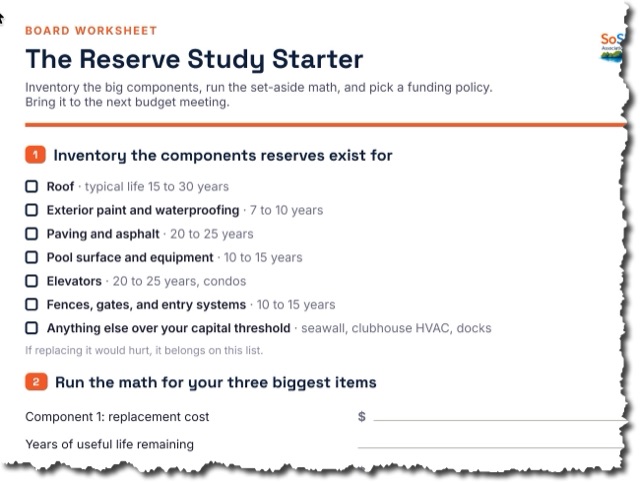
The Reserve Study Starter (PDF)
Inventory the big components, run the set-aside math on your three largest, and pick a funding policy the board actually votes on. One page for budget season.
Related reading
- From the blogHomeowners Association Reserve Funds in Plain English
- From the blogHOA Insurance Basics: Master Policy, HO-6, and D&O, Explained
- From the blogSpecial Assessments: How Boards Decide, Notice, and Collect Them Fairly
- From the blogHow to Read an HOA Budget as an Owner (Not a Board Member)
- From the blogHow Florida HOA Board Elections Actually Work — a Plain-English Guide
SoShiny Software Team is the collective byline for posts written by the people building SoShiny: engineers, designers, and the board members we work with every day.
We write about what actually works for community associations: governance that holds up under scrutiny, communication that residents read, and software that doesn't fight the people using it.
SoShiny is association management software for HOAs, condominium associations, and housing co-operatives anywhere in the United States. Headquartered in Daytona Beach, Florida. Built by people who've sat on a board.