
Glossary › A–Z
HOA Glossary — A to Z
Every term in one place. Search by name or filter by topic.
A
Annual Meeting
Board and GovernanceThe yearly gathering of all owners. The board reports on finances, owners elect directors, and members raise concerns. Most bylaws require it.
See also: How to Run an HOA Vote Online and Hit Quorum on the First Try · The HOA Annual Meeting Checklist: Notices, Quorum, and the Night Itself
Architectural Guidelines
Rules and EnforcementThe written standards for exterior changes. They spell out allowed materials, colors, and styles. Owners and the ARC both follow them.
Architectural Review Committee ARC
Rules and EnforcementThe group that reviews owner requests to change a home's exterior. A new deck, fresh paint, or a planted tree often needs ARC approval first. The committee checks each request against the rules.
Articles of Incorporation
Governing DocumentsThe papers that create the association as a legal entity, usually a nonprofit corporation. They list the association name, purpose, and registered agent. Owners file them with the state.
Assessment
Money and FinancesThe fee each owner pays to fund the association. Regular assessments cover steady costs like landscaping, insurance, water, and management. Boards collect them monthly, quarterly, or once a year.
See also: Roof Came in Under Budget: What Happens to the [[orange: Leftover]] Money · Your Building's Hurricane Deductible Is $840,000. Here Is Your Share.
Audit
Money and FinancesAn outside review of the association books. A certified accountant checks records for accuracy and red flags. Some states require one each year above a set budget size.
See also: Electronic Signatures · Sign Any PDF
B
Board of Directors
Board and GovernanceThe elected group that governs the association. Owners vote board members in at the annual meeting. The board hires help, sets budgets, and enforces the rules.
See also: Does a Licensed CAM Still Need Florida Board Certification?
Bylaws
Governing DocumentsThe rules for how the association operates. Bylaws cover board size, election steps, meeting rules, and officer duties. Think of them as the operating manual for the board.
See also: Your full rulebook, searchable in seconds. · Voting & Ballots
C
Capital Improvement
Money and FinancesA major upgrade that adds value or extends the life of common property. New playground equipment or a repaved lot counts. These cost more than routine repairs and often draw from reserves.
Committee
Board and GovernanceA smaller group the board sets up for a specific job. Common ones handle architecture, landscaping, social events, and finance. Committees advise the board but rarely hold final say.
See also: The Florida Condo Violation Workflow, Step by Step · Committees
Common Area
Property and Common AreasProperty the whole community shares and the association maintains. It covers things like pools, clubhouses, parks, and private roads. Assessments pay for its upkeep.
Covenant
Rules and EnforcementA promise written into the CC&Rs that binds owners. Some require action, like mowing a lawn. Others forbid action, like running a business from home.
D
Declaration (CC&Rs) CC&Rs
Governing DocumentsShort for Covenants, Conditions, and Restrictions. This is the master rulebook for the property. It sets limits on paint colors, fences, pets, parking, and home use. The CC&Rs run with the land, so they bind every owner who buys in.
Delinquency
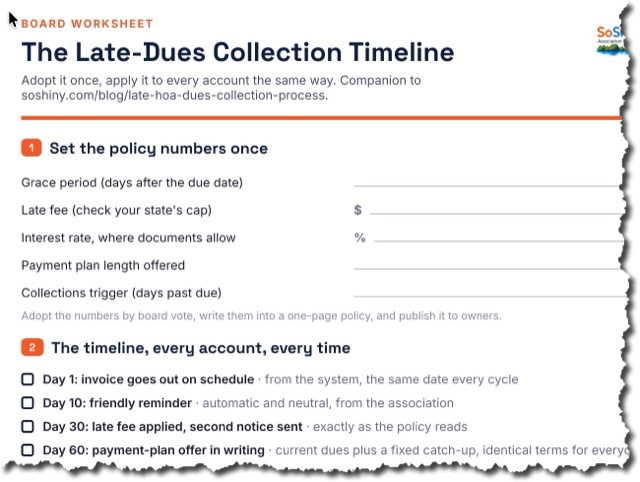
Money and FinancesAn unpaid or late assessment. Boards track delinquent accounts and apply late fees or interest. Long delinquencies can lead to a lien or legal action.
See also: Late Dues: A Firm, Fair Process for Collecting From Neighbors
E
Easement
Property and Common AreasA right to use part of someone's land for a set purpose. Utility crews and the association often hold them for pipes, wires, or access. The owner keeps title but cannot block the use.
Election
Board and GovernanceThe vote that fills open board seats. Owners cast ballots at or before the annual meeting. The bylaws spell out how nominations and counting work.
See also: How to Run an HOA Vote Online and Hit Quorum on the First Try · The HOA Annual Meeting Checklist: Notices, Quorum, and the Night Itself
Estoppel Certificate
Legal and Member RightsA document that states what an owner owes the association. Buyers and title companies request it before a sale. It locks in the balance so no surprise debt appears after closing.
Executive Session
Board and GovernanceA closed part of a board meeting. Boards use it for private matters like contracts, legal advice, and owner discipline. Minutes note that a session happened but skip the private details.
F
Fiduciary Duty
Board and GovernanceThe legal duty board members owe the association. It means acting in good faith and putting the community ahead of personal gain. A director who breaks it can face personal liability.
A money penalty for an unfixed violation. Boards charge it after notice and a chance to respond. State law often limits the amount and the steps.
See also: The Florida Condo Violation Workflow, Step by Step
Fiscal Year
Money and FinancesThe 12-month period the association uses for accounting. It often runs January to December, but some groups pick other dates. Budgets and audits follow this calendar.
Foreclosure
Legal and Member RightsA legal process to force the sale of a home over unpaid debt. Associations may use it on an assessment lien in many states. It is the last step after other collection efforts fail.
G
Governing Documents
Governing DocumentsThe full set of legal papers that control the association. The stack usually includes the declaration, bylaws, articles of incorporation, and written rules. Each owner agrees to follow them at purchase.
H
Hearing
Rules and EnforcementA meeting where an owner answers a violation notice. The owner states their side, and the board decides. Many states require this step before a fine sticks.
I
Indemnification
Legal and Member RightsA promise to cover a board member's legal costs from association duties. Bylaws and insurance often provide it. It protects volunteers who act in good faith.
L
Lien
Money and FinancesA legal claim against a home for unpaid assessments. It attaches to the property and must clear before a sale closes. In many states the association can foreclose on the lien.
Limited Common Element
Property and Common AreasA shared area set aside for certain owners. A balcony, assigned parking spot, or patio fits here. The owner uses it, but the association may still own it.
A single parcel of land owned by one member, common in single-family communities. The lot lines appear on the plat map. The owner maintains what sits inside them.
See also: Vehicle Registry
M
Maintenance Boundary
Property and Common AreasThe line that splits owner repairs from association repairs. The CC&Rs spell it out part by part. A clear boundary heads off arguments over who pays.
Management Company
Legal and Member RightsA hired firm that handles daily operations for the board. It collects fees, pays bills, schedules repairs, and tracks violations. The board still makes the big decisions.
See also: Self-Managed HOA or Management Company? Run the Real Numbers · Self-Managed vs. Management Company vs. Software: What's Right for Your Community
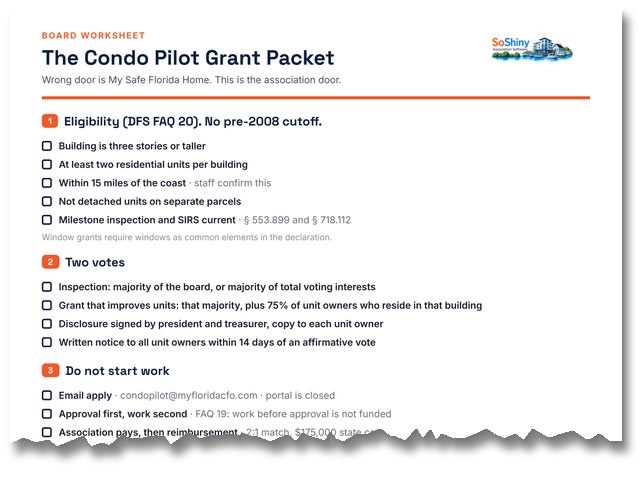
My Safe Florida Condominium Pilot MSFCPP
Money and FinancesA Florida Department of Financial Services grant for eligible condominium associations. The association applies. The inspection is free. The state matches $2 for every $1 the association spends, up to $175,000. Individual unit owners cannot apply. The house program, My Safe Florida Home, rejects condos.
N
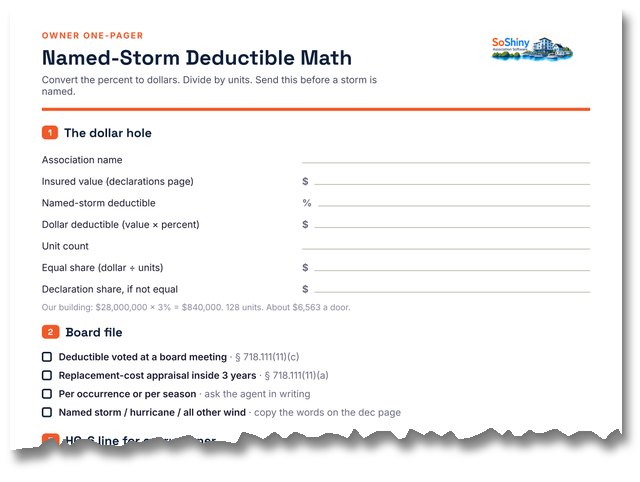
Named-Storm Deductible
Money and FinancesA percentage of a building's insured value that the association pays before wind coverage responds, once the National Hurricane Center names a storm. A 3 percent deductible on a $28 million building is $840,000. That amount is a common expense, split among unit owners.
See also: Your Building's Hurricane Deductible Is $840,000. Here Is Your Share.
Notice
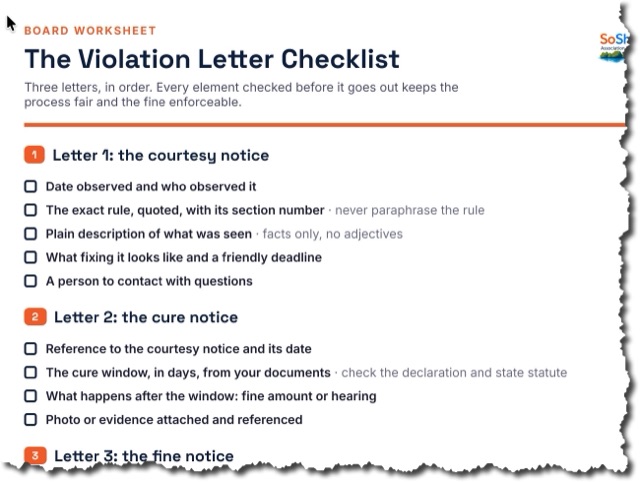
Rules and EnforcementThe written warning a board sends about a violation. It names the problem, cites the rule, and sets a deadline to fix it. Proper notice protects the board if the matter goes further.
See also: Special Assessments: How Boards Decide, Notice, and Collect Them Fairly · The HOA Annual Meeting Checklist: Notices, Quorum, and the Night Itself
O
Officers
Board and GovernanceThe board members with specific roles: president, vice president, secretary, and treasurer. The president runs meetings. The secretary keeps records, and the treasurer watches the money.
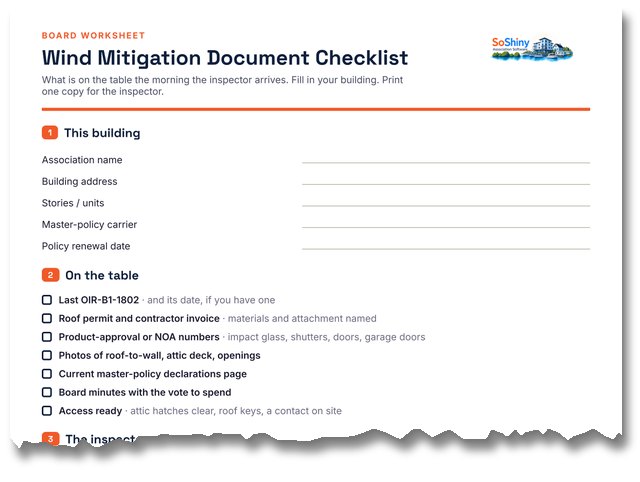
OIR-B1-1802 Form 1802
Money and FinancesFlorida's Uniform Mitigation Verification Inspection Form. Every property insurer in the state must accept it. Inspections on or after 1 April 2026 use Rev. 04/26. The form is valid up to five years with no material change to the structure.
See also: The Wind Mitigation Inspection: How a Florida Board Turns Form 1802 into Insurance Credits
Open Meeting Law
Legal and Member RightsA rule that requires board meetings to stay open to members. Owners get notice and a chance to watch most board business. Closed sessions are the narrow exception.
Operating Budget
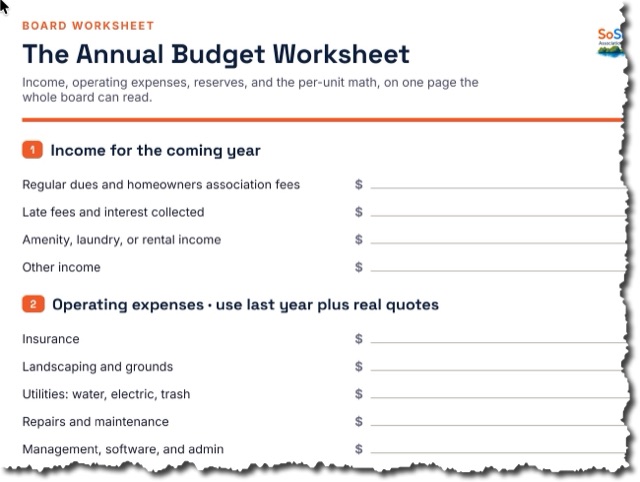
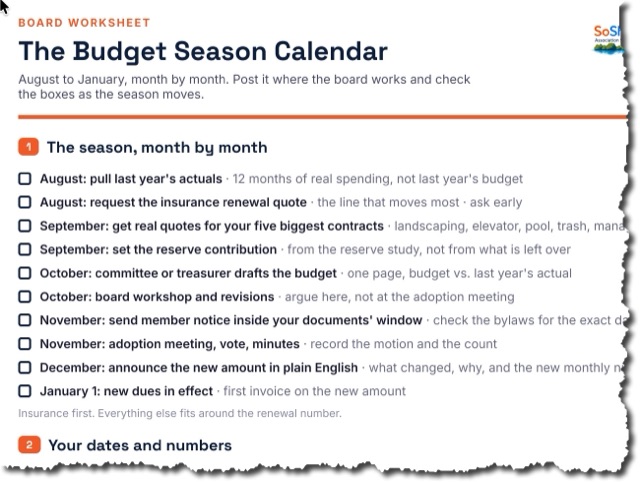
Money and FinancesThe yearly plan for income and spending. It lists expected fees coming in and costs going out. The board approves it and uses it to set assessment amounts.
P
Plat Map
Governing DocumentsThe official survey map of the community. It shows lot lines, common areas, easements, and streets. Boards use it to settle questions about who owns or maintains what.
Proxy
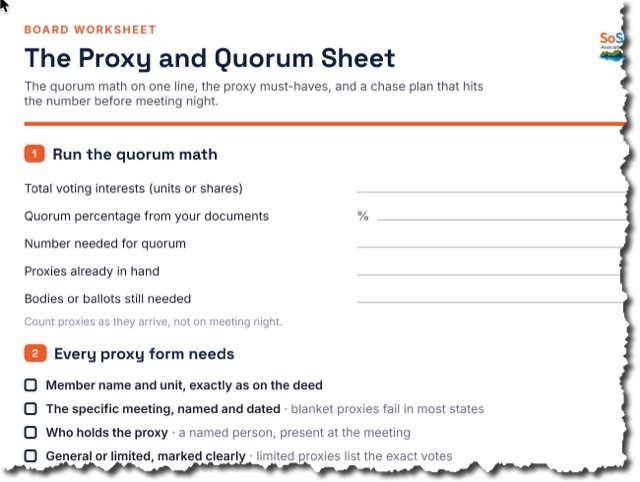
Board and GovernanceA signed form that lets one member vote for another. Owners who miss a meeting use one to count toward quorum. State law and bylaws set the rules for them.
Q
Quiet Enjoyment
Legal and Member RightsAn owner's right to use a home without unfair interference. Boards weigh it against shared rules on noise and nuisance. It limits how far the association can reach into private life.
Quorum
Board and GovernanceThe smallest number of members or directors needed for a vote to count. The bylaws set this figure. With no quorum, the meeting cannot make binding decisions.
See also: How to Run an HOA Vote Online and Hit Quorum on the First Try · The HOA Annual Meeting Checklist: Notices, Quorum, and the Night Itself
R
Resale Package
Legal and Member RightsThe set of documents an owner gives a buyer before closing. It includes the CC&Rs, budget, rules, and the estoppel certificate. State law often sets what must go in it.
Reserve Fund
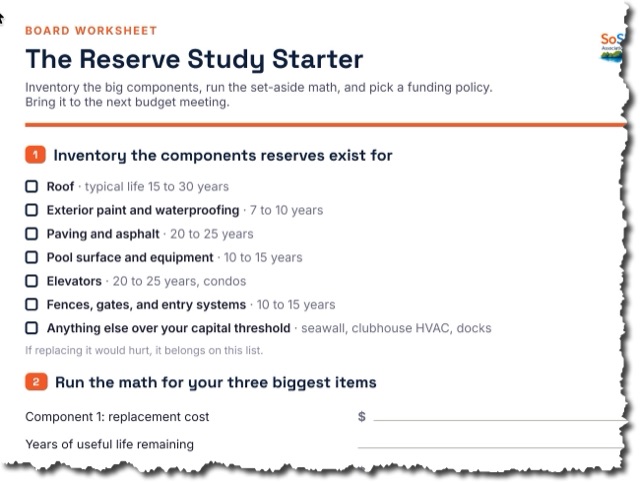
Money and FinancesSavings set aside for major repairs and replacements down the road. It pays for big items like roofs, roads, pools, and elevators. A funded reserve keeps the board from hitting owners with surprise charges.
See also: How to Read an HOA Budget as an Owner (Not a Board Member) · Homeowners Association Reserve Funds in Plain English
Reserve Study
Money and FinancesA report that predicts future repair costs. An expert inspects the property and estimates the remaining life of each major part. The study tells the board how much to save each year.
See also: Homeowners Association Reserve Funds in Plain English · HOA Budgets and Reserves in Plain Language
Right of First Refusal
Legal and Member RightsA clause that lets the association match an offer before an owner sells. Few modern HOAs use it, but some older ones still do. It gives the group a say over new buyers.
Rules and Regulations
Governing DocumentsThe day-to-day rules the board adopts under the CC&Rs. They handle details like pool hours, guest parking, and trash pickup. The board can change these without a full owner vote, within limits.
S
Setback
Property and Common AreasThe required gap between a structure and a lot line. It keeps homes off property edges and streets. Owners check it before building a shed or fence.
Special Assessment
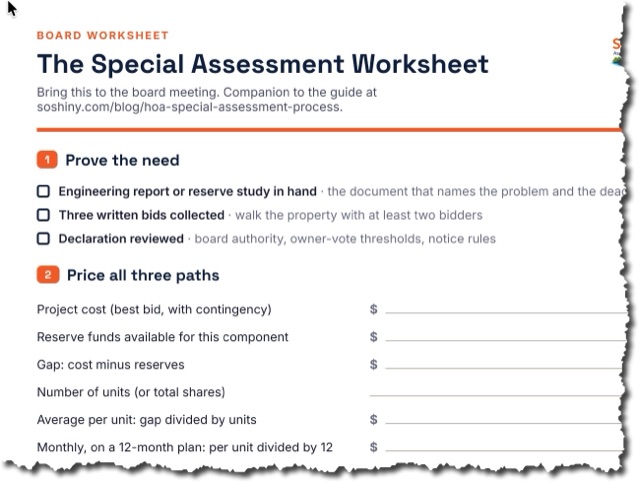
Money and FinancesAn extra charge on top of regular assessments. Boards use it for large costs the budget did not plan for, such as a new roof or a legal bill. Many states cap how much a board can levy without an owner vote.
See also: Roof Came in Under Budget: What Happens to the [[orange: Leftover]] Money · Your Building's Hurricane Deductible Is $840,000. Here Is Your Share.
T
Term
Board and GovernanceThe length of time a director serves before the next election. Bylaws often set two or three years. Staggered terms keep some experienced members on the board each year.
U
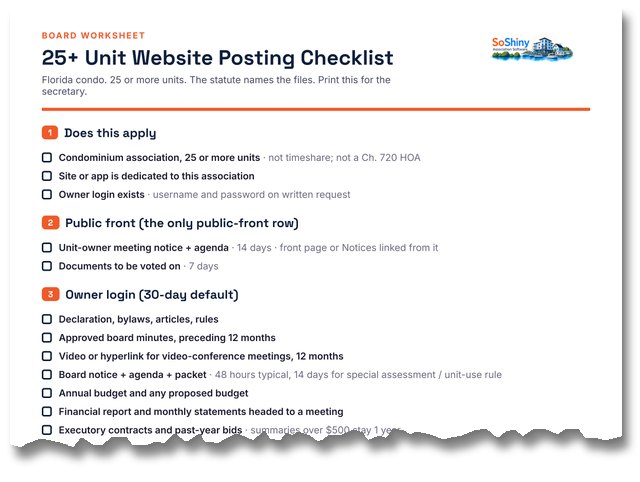
An owner's private space in a condo or townhome. It usually runs from the interior walls inward. The association handles the structure and the area outside.
See also: Your Florida Condo Must Have a Website, says Statute 718.111(12)(g) · Your Building's Hurricane Deductible Is $840,000. Here Is Your Share.
V
Variance
Rules and EnforcementBoard permission to break a rule in a specific case. An owner might get one for a fence slightly taller than the limit. The board grants it in writing.
Violation
Rules and EnforcementA break of the CC&Rs or rules. Examples include an unapproved fence, loud parties, or a parked RV. Boards send notice and ask the owner to fix it.
See also: The Florida Condo Violation Workflow, Step by Step · Violations Workflow
W
Wind Mitigation
Money and FinancesWork that makes a building resist hurricane wind: a stronger roof connection, sealed roof deck, impact-rated openings. In Florida a licensed inspector records those features on form OIR-B1-1802 so the insurer can apply required premium credits.
See also: My Safe Florida Home Will Reject Your Condo. Here Is the fix · The Wind Mitigation Inspection: How a Florida Board Turns Form 1802 into Insurance Credits