
Glossary › Board and Governance
How an HOA Board Works
Owners elect a board to run the association. The board makes decisions, sets policy, and answers to the membership. These terms describe who does what and how votes happen.
Board of Directors
#The elected group that governs the association. Owners vote board members in at the annual meeting. The board hires help, sets budgets, and enforces the rules.
See also: Does a Licensed CAM Still Need Florida Board Certification?
Officers
#The board members with specific roles: president, vice president, secretary, and treasurer. The president runs meetings. The secretary keeps records, and the treasurer watches the money.
Quorum
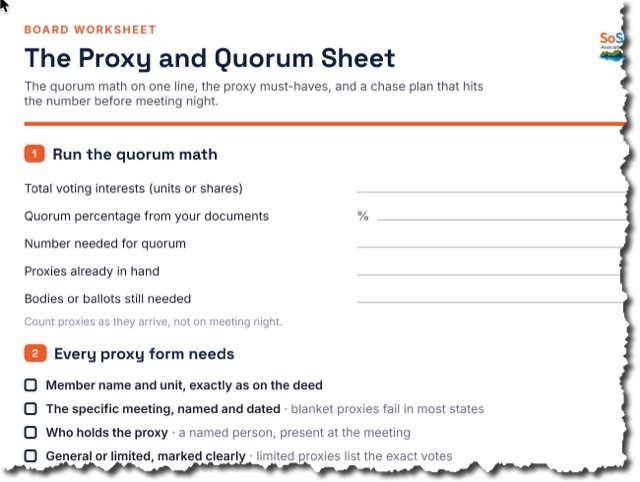
#The smallest number of members or directors needed for a vote to count. The bylaws set this figure. With no quorum, the meeting cannot make binding decisions.
See also: How to Run an HOA Vote Online and Hit Quorum on the First Try · The HOA Annual Meeting Checklist: Notices, Quorum, and the Night Itself
Proxy
#A signed form that lets one member vote for another. Owners who miss a meeting use one to count toward quorum. State law and bylaws set the rules for them.
Fiduciary Duty
#The legal duty board members owe the association. It means acting in good faith and putting the community ahead of personal gain. A director who breaks it can face personal liability.
Annual Meeting
#The yearly gathering of all owners. The board reports on finances, owners elect directors, and members raise concerns. Most bylaws require it.
See also: How to Run an HOA Vote Online and Hit Quorum on the First Try · The HOA Annual Meeting Checklist: Notices, Quorum, and the Night Itself
Executive Session
#A closed part of a board meeting. Boards use it for private matters like contracts, legal advice, and owner discipline. Minutes note that a session happened but skip the private details.
Committee
#A smaller group the board sets up for a specific job. Common ones handle architecture, landscaping, social events, and finance. Committees advise the board but rarely hold final say.
See also: The Florida Condo Violation Workflow, Step by Step · Committees
Term
#The length of time a director serves before the next election. Bylaws often set two or three years. Staggered terms keep some experienced members on the board each year.
Election
#The vote that fills open board seats. Owners cast ballots at or before the annual meeting. The bylaws spell out how nominations and counting work.
See also: How to Run an HOA Vote Online and Hit Quorum on the First Try · The HOA Annual Meeting Checklist: Notices, Quorum, and the Night Itself