
Lien for common charges; priority; exoneration of grantor and grantee
- Statute:
- New York §339-z · Law RPP (Real Property Law)
- Topic:
- Assessments & Finance · Lien priority
- Applies to:
- Condo associations
The board has a lien on each unit for unpaid common charges, prior to all other liens except taxes, first mortgages of record, and certain subordinate mortgages held by NY housing agencies. Grantors and grantees are exonerated for amounts above what is stated in the manager's statement.
📄 Read the official text at nysenate.gov →
Full statutory text
How SoShiny helps with Lien for common charges; priority; exoneration of grantor and grantee
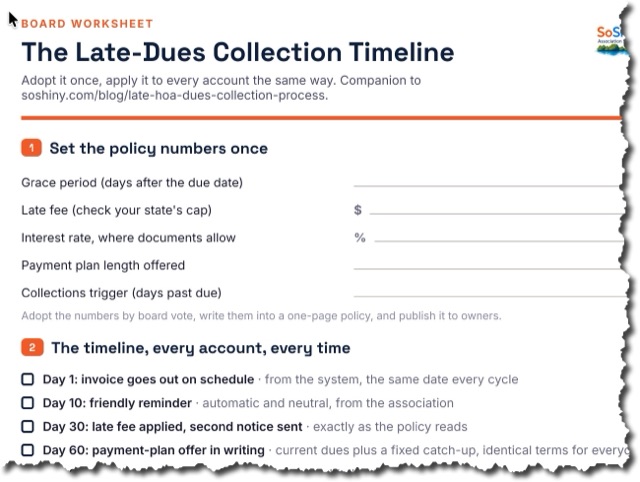
SoShiny calculates per-unit assessments automatically from ownership percentages and tracks payment status against every levy. The unit-level ledger is the audit trail your CPA, attorney, and the board need when an owner disputes a charge.
See the feature → Start freeFrequently asked
- What does New York §339-z require?
- The board has a lien on each unit for unpaid common charges, prior to all other liens except taxes, first mortgages of record, and certain subordinate mortgages held by NY housing agencies. Grantors and grantees are exonerated for amounts above what is stated in the manager's statement.
- Who does New York §339-z apply to?
- New York §339-z applies to Condo associations in New York.
- What happens if our condo or HOA doesn't comply with §339-z?
- Non-compliance with this New York statute can expose the association and its officers to private civil suit, and (for offering-plan / sponsor matters under GBS) to enforcement action by the New York Attorney General's Real Estate Finance Bureau. SoShiny's audit trail and documented workflows are designed to demonstrate good-faith compliance.
- Where can I read the official text of New York §339-z?
- The official text is published by the New York State Legislature at nysenate.gov. The summary on this page is for plain-English reference only and is not legal advice.
- How does SoShiny help with Lien for common charges; priority; exoneration of grantor and grantee?
- SoShiny calculates per-unit assessments automatically from ownership percentages and tracks payment status against every levy. The unit-level ledger is the audit trail your CPA, attorney, and the board need when an owner disputes a charge. Learn more →
Not legal advice. This page is a plain-English summary of New York §339-z prepared by SoShiny for board members and managers. For binding legal advice or interpretation, consult a New York-licensed attorney. For the official statutory text, see the link above.
Stay current on New York association law.
Get the free quick-reference guide plus a heads-up when the statutes that govern your community change.
Don’t run your condo or HOA on spreadsheets.
Start your community free →