
HOA accounting software with a real double-entry general ledger
SoShiny keeps your homeowners association's full set of books: a chart of accounts, a double-entry general ledger, bills and payments, bank reconciliation, budget versus actual, per-component reserves, and 1099s at year end. You can bring your history over from QuickBooks, and your CPA can export everything they need.
What most boards actually need from accounting software
Search for HOA accounting software and you get two extremes: enterprise general ledgers built for management companies, and spreadsheets. Most self-managed boards need neither. They need dues collected on time, a clear record of who paid, and financials their accountant can work with.
SoShiny does both halves: it collects the dues and keeps the books they land in.
The books, in full
SoShiny keeps a real set of books for the association, not a log of payments dressed up as accounting.
- A double-entry general ledger. Every transaction posts a balanced journal entry against a chart of accounts you control. Operating and reserve money are tracked on each individual line, so the two can never quietly merge.
- Bills and payables. Enter a vendor bill once, split it across expense accounts, record payments against it, and always know what the association owes today.
- Bank reconciliation. Match the ledger to the statement and close the month only when it balances to zero. Not close. Zero.
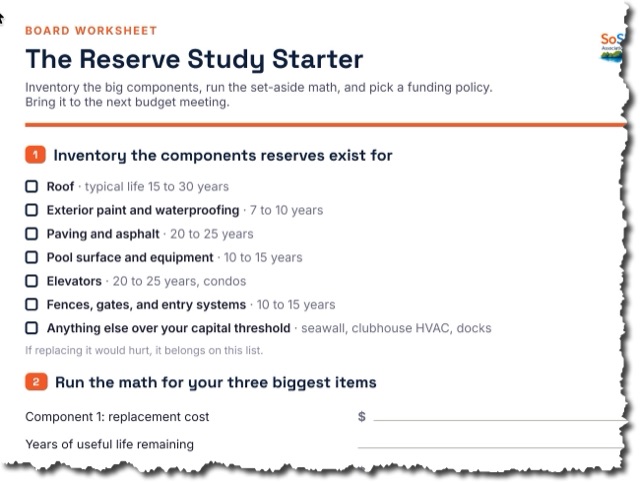
- Financial statements. Balance sheet, income statement, budget versus actual, and a reserve schedule, generated from the ledger rather than assembled by hand.
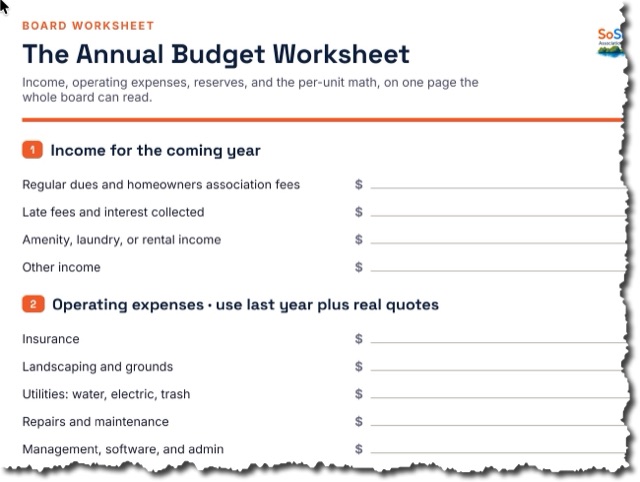
- Budget and cash forecast. Build the annual budget by line, then see twelve months of projected cash adjusted for what your community actually collects.
- 1099 reporting. Vendor totals accumulate all year, so January is a report instead of a research project.
- Vendor vetting. Approval status, W-9 and insurance on file, and a warning before you pay a contractor whose coverage lapsed.
- Period locking. Close a month and it stops moving. Past financials stay the financials you actually sent out.
Dues collection, built in
- Bank transfer or card. Owners pick. ACH keeps costs low; cards add a processing fee (4% or $1.50, whichever is greater) the payer sees up front.
- Autopay. Owners enroll once and monthly homeowners association fees collect automatically, with scheduled retries and human follow-up when a payment fails.
- Itemized fees. The checkout shows the dues line, the processing cost, and the convenience fee separately. The board can absorb fees instead if it prefers.
- Your bank account, not ours. Funds settle through Stripe directly to the association's account. SoShiny never holds community money.
- A collections trail. Who paid, who is late, what bounced, and when the board was told.
Does SoShiny replace QuickBooks?
Yes, for most self-managed associations. SoShiny keeps real double-entry books: every transaction posts a balanced journal entry, funds are tracked per line so operating and reserve money never blur together, closed periods lock, and the reports your board and your CPA need come out the other end. There is a guided import that brings your chart of accounts, opening balances, month-by-month history, vendors and unpaid bills over from QuickBooks, so you are not retyping a year of work.
If your association runs on an outside bookkeeper who prefers to stay in QuickBooks, that works too. Everything exports as CSV your accountant can open, and payment records stay clean either way.
Moving your books over
The reason boards stay on software they have outgrown is almost never the software. It is the thought of re-entering a year of history. The guided import reads the reports QuickBooks already produces: export a trial balance and a profit and loss by month, upload both, and SoShiny brings across your chart of accounts, opening balances, month-by-month history, vendor list, and unpaid bills.
Every import previews first. You see which account each row lands in and what it will post before a single entry is written. It was built against a real 128-unit association's actual QuickBooks exports rather than clean sample files, which is why it copes with blank header columns, account numbers buried in names, sub-accounts, and the double-counting trap where a trial balance and a monthly profit and loss both contain the same income.
The rest of the board's year is included
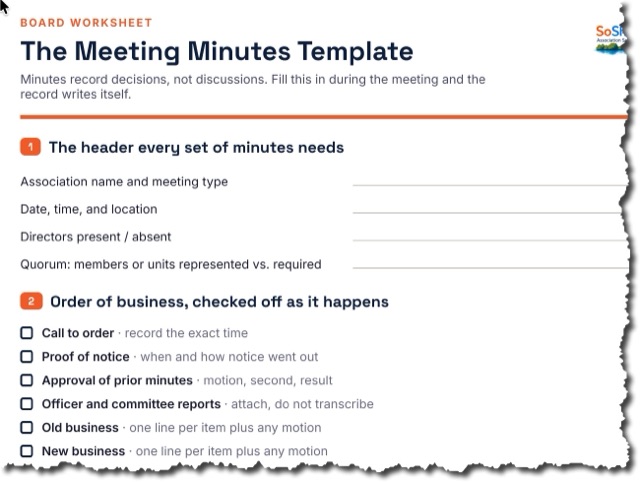
Dues are one line item. The same $25 a month plan runs your elections, meetings and minutes, violations, public website, and document vault. See the plain-English guide to collecting dues and the money and finances glossary for the vocabulary.
FAQ about HOA accounting and dues collection
Is SoShiny a full HOA accounting system?
Can SoShiny replace QuickBooks for our association?
Does SoShiny produce reports our CPA can use?
How does SoShiny collect HOA dues?
What does dues collection cost the association?
Can owners see where the fees go?
Does SoShiny track delinquent accounts?
How much does SoShiny cost?
Collect next month's dues online
Every feature on every plan. $25/mo base + $0.33 per unit. 30-day free trial, no card required.
Get started free