
HOA board governance, explained end to end
Every homeowners association board cycles through the same seven jobs: elections, meetings, money, rules, insurance, records, and the law behind them. This page maps all of it, with a plain-English guide for each piece, written by a sitting board treasurer.
Joining the board
What nobody tells new directors before the first meeting.
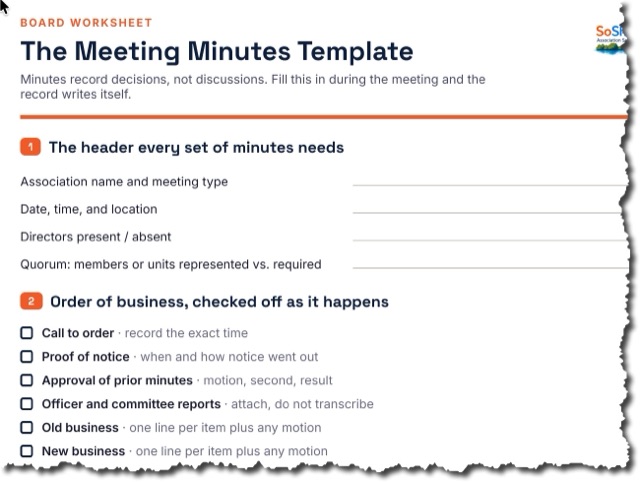
Meetings, minutes, and quorum
Notice windows, agendas, and a record that holds up.
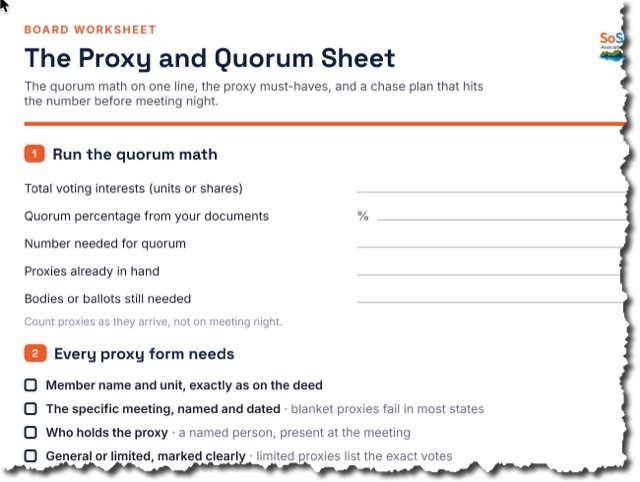
Elections and voting
Ballots, proxies, and getting to quorum without begging.
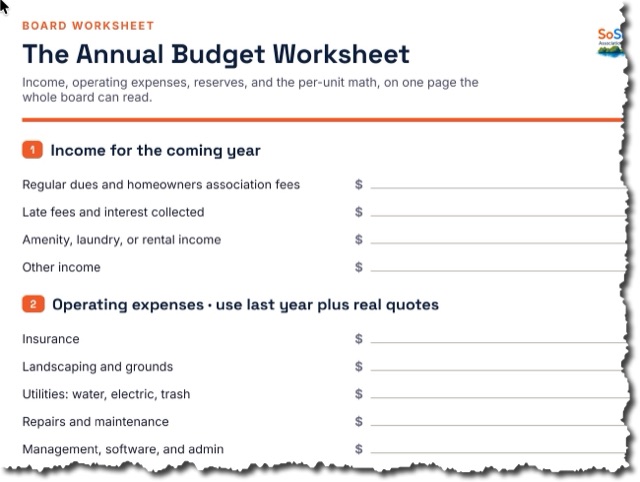
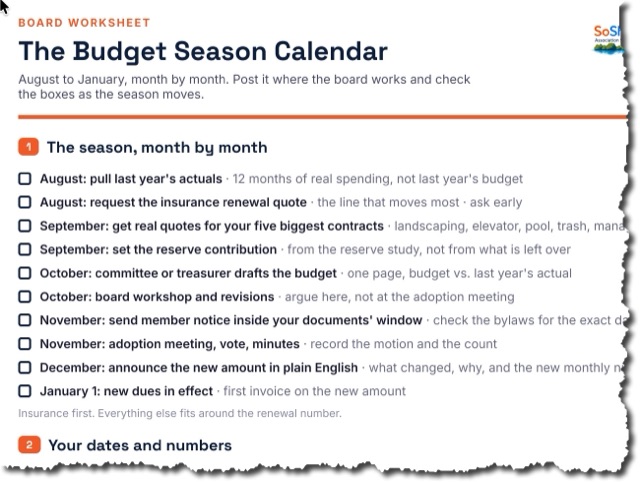
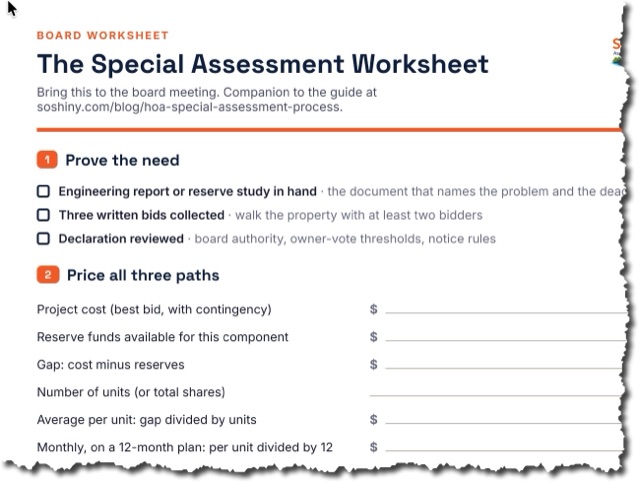
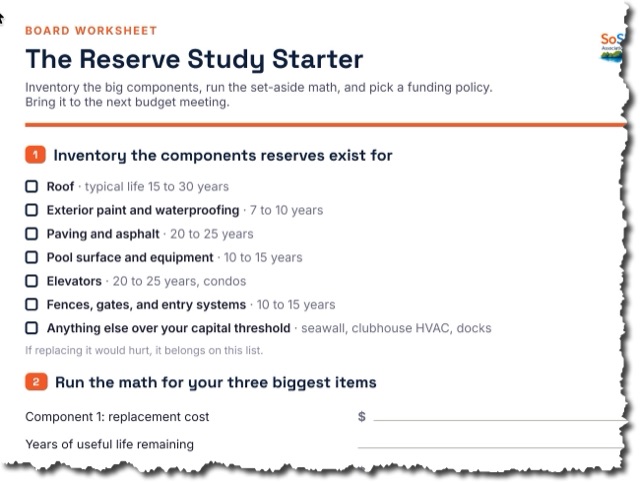
Money: budgets, reserves, assessments, dues
The four money jobs every board owns.
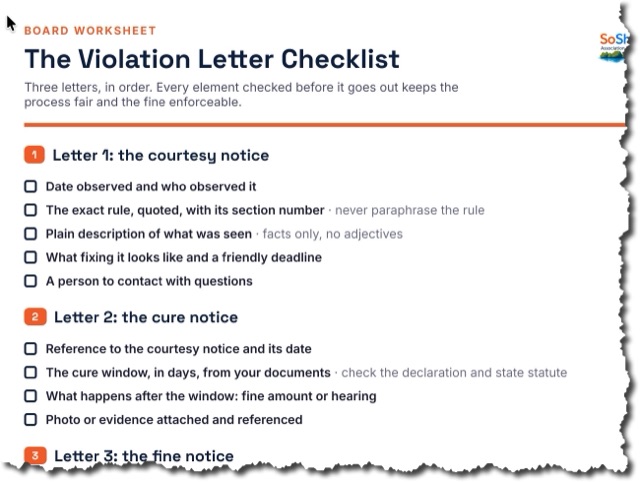
Rules and enforcement
From courtesy notice to hearing, by the book.
Insurance and risk
Master policy, HO-6, D&O, and who covers what.
Records and paperwork
Keep what the statute requires, sign without printing.
The law behind all of it
Plain-English statute libraries, searchable by section.
Self-managing with confidence
The five-part series on running the board without a management company.
FAQ about HOA board governance
What does an HOA board actually govern?
Where should a brand-new board member start?
What is the difference between governing documents and state statutes?
How often should a board meet?
Do small communities need all this structure?
Software shaped like these seven jobs
SoShiny runs the elections, the meetings, the money, and the records in one portal. Every feature on every plan, $25/mo + $0.33 per unit.
Get started free