
Voting; proxies
- Statute:
- North Carolina §47C-3-110 · Chapter 47C (North Carolina Condominium Act)
- Topic:
- Meetings & Voting · Votes and proxies
- Applies to:
- Condo associations
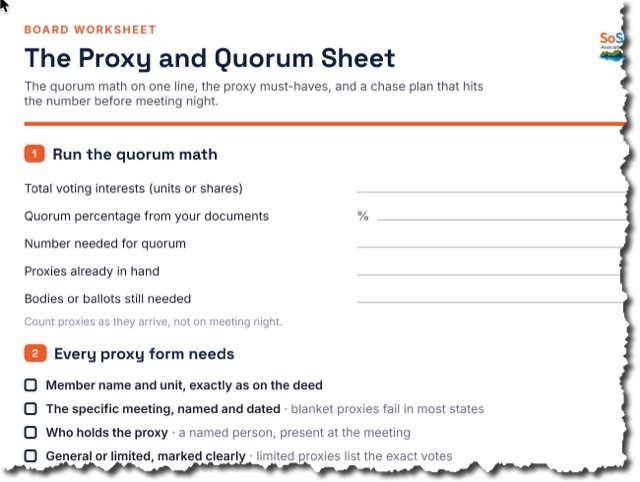
Multiple owners of a unit vote by majority-in-interest unless the instruments say otherwise; one owner may cast the votes if no co-owner protests. A proxy must be dated and terminates one year after its date unless it states a shorter term. Votes allocated to a unit the association owns may not be cast.
📄 Read the official text at ncleg.gov →
How SoShiny helps with Voting; proxies
SoShiny builds your meeting agenda, posts statutory notice, runs the meeting from one screen, records motions and resolutions with per-member yes/no/abstain votes, and produces print-ready minutes that meet Florida §718.112 / §720.303 notice and recordkeeping requirements.
See the feature → Start freeFrequently asked
- What does North Carolina §47C-3-110 require?
- Multiple owners of a unit vote by majority-in-interest unless the instruments say otherwise; one owner may cast the votes if no co-owner protests. A proxy must be dated and terminates one year after its date unless it states a shorter term. Votes allocated to a unit the association owns may not be cast.
- Who does North Carolina §47C-3-110 apply to?
- North Carolina §47C-3-110 applies to Condo associations in North Carolina.
- What happens if our condo doesn't comply with §47C-3-110?
- Non-compliance can expose the association and individual directors to disputes in the governing forum for North Carolina community associations. SoShiny's audit trail and documented workflows are designed to demonstrate good-faith compliance.
- Where can I read the official text of North Carolina §47C-3-110?
- The official text is published by the North Carolina General Assembly at ncleg.gov. The summary on this page is for plain-English reference only and is not legal advice.
- How does SoShiny help with Voting; proxies?
- SoShiny builds your meeting agenda, posts statutory notice, runs the meeting from one screen, records motions and resolutions with per-member yes/no/abstain votes, and produces print-ready minutes that meet Florida §718.112 / §720.303 notice and recordkeeping requirements. Learn more →
Not legal advice. This page is a plain-English summary of North Carolina §47C-3-110 prepared by SoShiny for board members and managers. For binding legal advice or interpretation, consult a North Carolina-licensed attorney. For the official statutory text, see the link above.
Stay current on North Carolina association law.
Get the free quick-reference guide plus a heads-up when the statutes that govern your community change.
Don’t run your condo on spreadsheets.
Start your community free →