Auto-pulled from Buzzsprout. Times mark where each stretch starts in the audio.
0:34
If you've ever attended an HOA board meeting where the president loses control of the audience, this podcast is for you. By following a simple set of meeting etiquette guidelines called the Roberts Rules, you will come away from this podcast better equipped to run a board meeting than ever before. Welcome to the HOA Case Files, a fun but serious look at running a self-managed board. Each week, we cover one real problem with two opinions and ways to tame the craziness. Things like dues, repairs, reserves, vendors, software,
1:11
meetings, and the neighbor who will not stop emailing you at 1 a.m. We argue the cost, debate the risk, and which fights are worth the trouble. For volunteer boards who have to decide something quickly and need advice on real-world association concerns. Let's get right into it. Have you ever been trapped in one of those incredibly chaotic, like three-hour volunteer board meetings? Oh, I think anyone listening knows exactly the kind you mean. Right. You know the exact five. Like someone is shouting over by the coffee maker,
1:42
and there are uh three completely different topics being fiercely debated at the exact same time. Aaron Ross Powell And somehow the loudest voice in the room is the one winning. Exactly. And then when the dust finally settles, absolutely nothing has actually been decided. It's just exhausting. Aaron Ross Powell It really is. So today our mission is to basically decode the secret to running fair, efficient meetings, meetings where everyone actually gets a turn to speak, and miraculously, you still finish on time. Aaron Powell Which almost sounds
2:12
impossible, but there is a system for it. Aaron Powell There is. And we are pulling from a really fascinating stack of sources for this. We have notes on a guide called Robert's Rules Without the Eye Roll, uh, the official Robert's Rules of Order website, uh plain English parliamentary guide, and a whole suite of community management resources from uh a company called So Shiny Software. Aaron Powell Yeah. And whether you are prepping to take a seat on your local condo board or maybe your HOA, or you
2:38
just want to understand the underlying machinery of group decision making at your office, this is for you. Aaron Powell It's the ultimate meeting playbook. Aaron Powell But to actually use the playbook, we first have to understand the uh the core philosophy behind it. Aaron Powell Because it's not just a bunch of red tape. Right. A lot of people think Robert's rules of order is just this list of arbitrary bureaucratic hurdles designed to bore people to death. Aaron Ross Powell I mean can definitely feel that way
3:00
sometimes. Aaron Ross Powell It can but at its heart it is engineered to balance two competing forces in literally any democratic group. It aggressively protects the rights of the minority to be heard while simultaneously guaranteeing that the majority ultimately gets to rule and make a decision. Aaron Ross Powell That balance is so crucial. And the history of how that balance came to be is genuinely fascinating. Aaron Powell It's a great backstory. Yeah. This framework is America's foremost guide to parliamentary procedure. And it's been maintained since
3:29
1876, originally created by General Henry M. Robert. Aaron Powell And when you dig into his background, the strictness of the whole system makes perfect sense. Aaron Powell Right. Because he was an army engineering officer just after the Civil War. So you have people from wildly different regions suddenly working together, and they brought, you know, completely incompatible habits for how to argue and how to make decisions. So he basically applied engineering logic to human social friction. Aaron Ross Powell That is exactly what he did. He wanted
3:58
a universal operating system for civil discourse. And you know, that system is still the gold standard used by local governments and professional associations today. Aaron Powell It is. And just to give you a sense of his modern relevance from the sources, the American Institute of Parliamentarians recently adopted a resolution nominating General Robert as a candidate for the renaming of military bases. Right. And just to be clear for you listening, we're just impartially reporting the facts from the official website here. There's currently a lot of civil
4:27
discourse regarding the removal of Confederate officers' names from public spaces. And his legacy is uh situated right in the middle of those current institutional conversations regarding public history. Aaron Ross Powell Exactly. We're just sharing what's in the source material to show his ongoing relevance. Trevor Burrus Yeah. But um applying his 19th-century engineering logic to your local board meeting requires understanding the hierarchy of authority first. Aaron Powell This is a huge point. Yeah. The So Shiny Guide emphasizes something that completely changes how you should view this
4:59
rule book. Robert's rules is not legal advice, and it is not the ultimate law of the land. Right. The sources specifically mention Florida chapters 718 and 720, which you know govern condos and HOAs there. But this underlying principle applies to any state you live in. Absolutely. Any state, whether you are in New York, Texas, California, Ohio, it doesn't matter. Your specific state statutes and your own community bylaws will always, always override Robert's rules. That hierarchy is completely non-negotiable. Yeah. If your community bylaws state that you
5:33
need, say, 14 days of notice before an election, or your state law dictates a highly specific method for counting absentee ballots, you can't just pull out a copy of Robert's rules to bypass those laws. Right. The parliamentary framework is just designed to fill in the operational gaps of a meeting. It governs how you speak to each other, not the legal parameters of your organization. Aaron Powell I always look at it like the uh default operating system on a smartphone. Oh, that's a good way to think
6:00
about it. Aaron Powell Yeah, like Roberts Rules run smoothly in the background. It handles all the basic functions and it essentially keeps the meeting from crashing. Right. But if your state law or your local bylaws have a custom application installed, that custom setting always takes over. Aaron Powell And the problem really arises when volunteer boards don't realize where that default operating system ends and the custom legal settings begin. Definitely. Because even if you have memorized your state laws perfectly, you can't just walk into a room,
6:27
bang a gavel, and start writing checks on behalf of the community. The entire legal foundation of whether your meeting even exists rests on a mathematical threshold. Which brings us to arguably the most powerful word in parliamentary procedure quorum. Yes. Quorum is just the minimum number of members who must be present to conduct official business. But you know, here is a scenario that plays out in community clubhouses every single week. I can probably guess what it is. Everyone is sitting around looking at their watches, and the
6:57
board is exactly one person short of a quorum. Oh yeah. The absolute classic. Right. And the temptation to just ignore the math is overwhelming. People think, well, everyone is busy. We all know the roof needs fixing. Let's just vote on it now in the parking lot and fix the paperwork later. Do not do that. Giving into that temptation creates a catastrophic legal liability. Aaron Powell Wait, catastrophic? Yes. The source material shoots that idea down completely. The mechanism of a quorum exists specifically to prevent like a
7:30
rogue faction of three people from passing a massive special assessment at 11 o'clock on a Tuesday night. Oh wow. Yeah, that makes sense. If you lack a quorum, sure, you can talk about the roof, you can take notes, but you absolutely cannot pass binding motions. Aaron Powell So what happens if you do? If you hold a parking lot vote and sign a $50,000 landscaping contract without a quorum, you are spending community money illegally. Any disgruntled owner can sue the board, invalidate the contract, and leave the
7:59
board members personally liable. Personally liable. That's right. That is terrifying. It really is. Aaron Ross Powell So the proper procedure is actually surprisingly simple, but you just have to be disciplined about it. Aaron Powell Right. You call the meeting to order, the secretary states out loud that there is no quorum, logs that fact in the minutes, and then you adjourn. Trevor Burrus, you just reset. You don't invent a phantom attendee to make yourself feel better. Aaron Powell Exactly. But assuming you actually hit your number, the
8:26
meeting officially begins, and you move into the standard order of business. Aaron Ross Powell And the sequence of that business is what really builds trust with the community, isn't it? Aaron Powell Yeah, it keeps things honest. You call to order, check the quorum, approve the previous minutes, hear reports, handle old business, introduce new business, and then adjourn. Aaron Powell And following that exact sequence proves to the members that the meeting will actually do what the posted agenda promised. Aaron Powell Right. Like skipping over old business
8:52
just because the topic is uncomfortable immediately breeds suspicion. Aaron Powell Yeah. People notice that stuff. So once you are in that structure and the agenda set, you enter what the sources call the engine of the meeting, the motion loop. The engine. Yes. I always found this part incredibly bureaucratic, to be honest. Like, why do we need a rigid multi-step process just to agree to hire a roofer? Trevor Burrus, it feels like a lot of friction, right? Yeah, exactly. But the guide explains that this friction is
9:21
entirely intentional. The golden rule here is one topic at a time. Aaron Powell And the chair acts strictly as traffic control, not as a combatant trying to win the argument. Right. So the mechanism of the loop forces clarity and slows down that emotional decision making. First, a member makes a main motion. They say, I move that we hire ACME roofing. Then a second member must second the motion. The chair formally states the motion to the room. The board debates it. The chair puts the question, which
9:50
basically means asking if everyone is ready to vote. Yep. Then the board votes, and finally the chair announces the result. When you break it down like that, the motion loop acts exactly like a four-stroke engine in a car. Oh, that's a great analogy. Yeah, you have intake, compression, combustion, and exhaust. The intake is the motion itself, right? Bringing the fuel, the raw idea into the engine. I move that we do X. Right. And then the second is the compression. It readies the fuel for the spark.
10:18
If you try to skip the second and jump straight into people arguing the combustion, the whole engine floods and the meeting stalls out entirely. Because you cannot have combustion without compression. Exactly. And finally, the vote and the announcement act as the exhaust. The decision is processed and expelled, clearing the chamber completely so the next idea can enter. Aaron Powell And you know, the psychology behind that compression stage, the second, is where a lot of boards get tripped up. Aaron Powell Really? How so? Well, people assume
10:45
that if they second a motion, they are publicly endorsing it like they're co-signing alone or something. Aaron Powell Oh, I've definitely thought that. Most people do. And that hesitation stalls the engine. But seconding a motion has absolutely nothing to do with supporting the idea. It simply signifies that at least two people in the room believe the topic is worth the group's time to discuss. Aaron Powell Wait, really? So you don't have to agree with it. Not at all. You might fully plan to vote against hiring
11:10
ECME roofing, but you second it anyway just so the idea can reach the combustion phase of debate, be voted down on the record, and stop being a persistent distraction. Aaron Powell Oh wow. That distinction relieves an enormous amount of pressure. You can literally second a terrible idea just to legally kill it. Exactly. And while this engine is running, the chair manages the flow using specific pocket lines provided in the guide. Like, are you ready for the question? Right. Or instead of telling someone to stop rambling,
11:38
the chair says, it is moved and seconded that we hire ACME roofing. Is there further debate on that specific motion? Aaron Powell I see. It depersonalizes the conflict. The language removes the individual from the crosshairs. Exactly. The chair is pointing at the motion, not the person. But you know, even a well-oiled engine needs adjustments mid-flight. For sure. During debate, the board might realize that ACME roofing is way too expensive and the motion on the floor is just flawed. This is where you have to navigate the
12:07
weeds using amendments and subsidiary tools. Aaron Powell And the sources outline two paths here. The first is a friendly amendment. That's just a minor tweak that everyone intuitively agrees to. Like fixing a typo or changing a minor date. Yeah. If the person who made the original motion accepts the change and nobody else objects, you simply update the text and keep moving. But when things get contentious, you need a formal amendment. Right. Where a member actually has to state, I move to amend by striking the words
12:37
acme roofing and inserting beta builders. And this introduces a sequence that frequently derails amateur boards. Oh, it causes so much confusion. When a formal amendment is moved and seconded, the board must vote on the amendment first. You debate the change, vote on whether to adopt the change, and then you must still vote on the main motion as amended. If you scramble that order, absolute chaos ensues. Like half the room raises their hands thinking they are voting to hire beta builders, while the other half thinks they
13:07
are voting on the original ACME contract. And then the legal record becomes a complete mess. The guide emphasizes that amendments must be worded tightly. Vague amendments that require 10 minutes of clarification just burn the clock. Alongside amendments, the parliamentary toolkit includes subsidiary motions to manage the flow of time. Right. Like if you are missing crucial information, you can use the motion to postpone to a time certain. Which is the professional way to pause a discussion while waiting for, say, another contractor's bid. Yeah, exactly. You can
13:39
also refer to committee. But the sources stress that this motion must include specific deliverables and a firm deadline. Aaron Powell That is so important. Without a deadline, referring to a committee is basically just sending an idea into a black hole. Yeah, we've all seen that happen. And then there is the motion to lay on the table, which the sources flag is highly prone to abuse. Aaron Powell Extremely prone to abuse. Aaron Powell The mechanism is designed strictly to set a topic aside temporarily for an immediate
14:05
emergency, like you literally need to evacuate the building because of a fire alarm. Right. But board members routinely use it as a weapon to kill a motion they dislike without having to go on the record with a formal vote. Aaron Powell That's why the guide strongly suggests preferring the postpone motion, just to maintain transparency. Aaron Ross Powell Because transparency and minority rights are constantly balancing against the group's need to actually finish the meeting, which brings up one of the most powerful and honestly often aggressive tools
14:34
in the entire playbook. Aaron Powell The motion to call the question. Yes. Okay. I have to ask. On a practical level, doesn't that always feel like an aggressively polite way of telling someone to shut up because the rest of the room is bored and wants to go home? Aaron Ross Powell It definitely feels that way. Aaron Ross Powell It feels like a direct violation of that core philosophy we started with, you know, protecting the rights of the minority to be heard. Aaron Ross Powell I get
14:56
that. Structurally, it is a mechanism designed to suppress the minority's right to debate. It forces an immediate end to the discussion and triggers a final vote. Aaron Powell Which sounds tyrannical. It would be. If this motion only required a simple majority, it would be a disaster. Fifty-one percent of the room could silence the other 49% the exact moment they felt annoyed. Right. But the genius of the system is the mathematical safeguard built into this specific tool. Calling the question requires a two-thirds vote to pass. Oh.
15:28
That threshold changes the entire dynamic. Aaron Ross Powell Exactly. It demands overwhelming consensus. You need 67% of the room to formally agree that everything that needs to be said has already been said. A bare majority cannot bully the minority into silence. Aaron Powell Knowing that the math protects the process is really reassuring. But honestly, the reality of executing this in real time is daunting. Aaron Powell It is a lot to juggle. Yeah. Like memorizing 19th century parliamentary rules, calculating two-thirds threshold in your head, tracking formal
15:59
amendments, ensuring quorum math, that is a massive administrative burden for busy volunteers who have day jobs. It really is. So the question becomes how to lift that burden so they can actually focus on making the decisions they were elected to make. Aaron Powell Well, the official Roberts Rules Organization recognizes this modern challenge. They have developed a 12th edition PC application and released a third edition in brief as an audiobook to help people absorb the theory. Aaron Powell That's helpful. But knowing the theory doesn't stop the
16:30
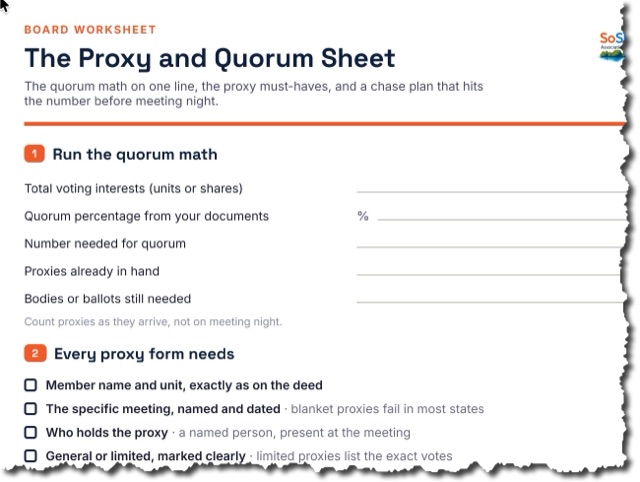
real-time logistical crises that derail community governance. No, it doesn't. And that is where the practical application from the so shiny software resources comes into play. The sources highlight how their tools basically translate the theory of Roberts rules into actionable day-to-day operations. Aaron Powell Yeah, they provide an extensive library of free printable guides tailored for the exact logistical nightmares that cause volunteer burnout. Aaron Powell Right, like look at the mechanism of their proxy and quorum sheet. Earlier we discussed the legal catastrophe of voting without a quorum.
17:02
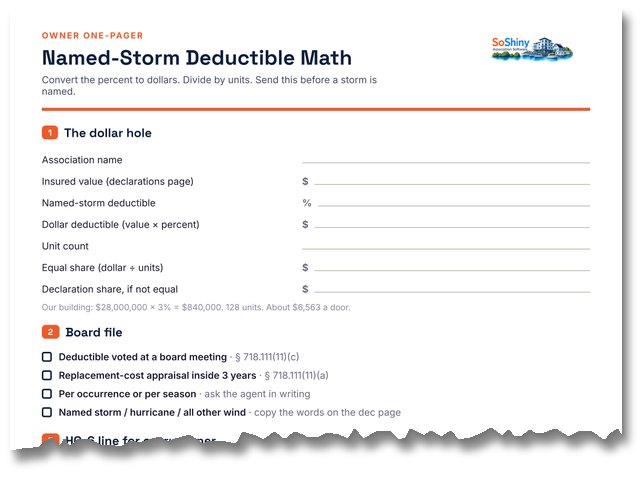
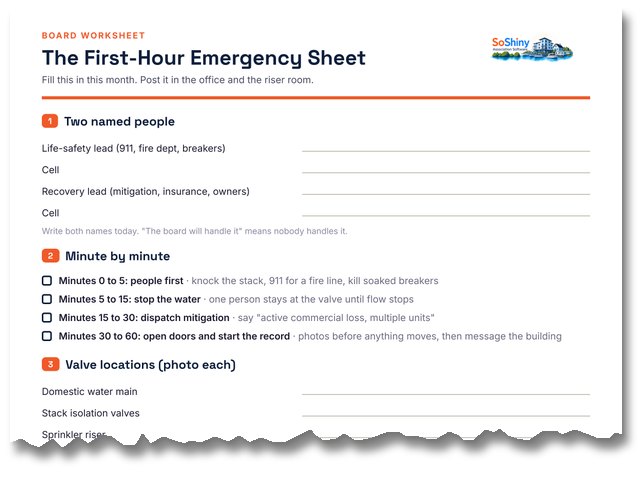
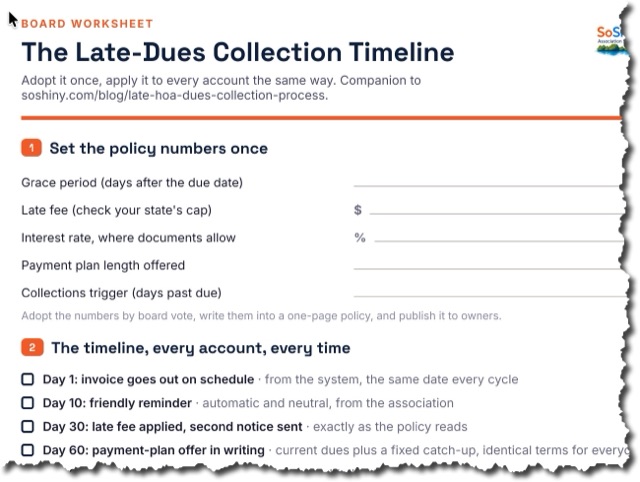
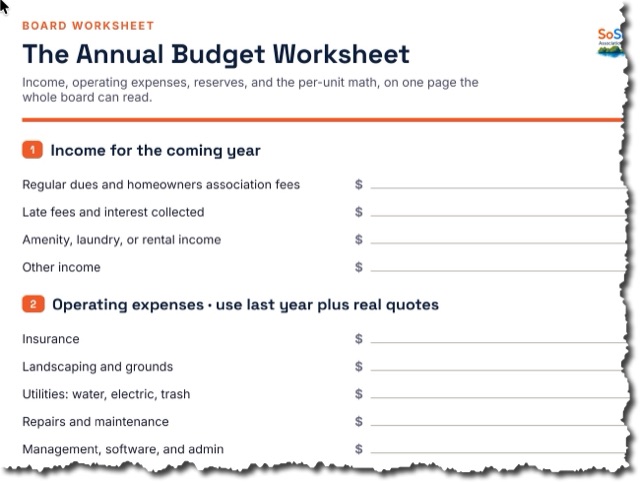
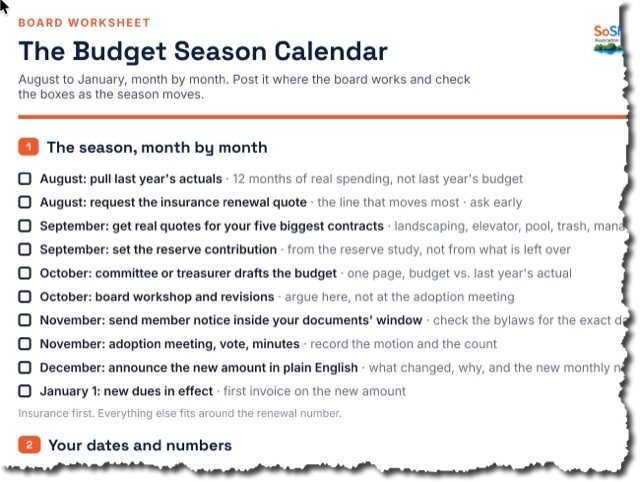
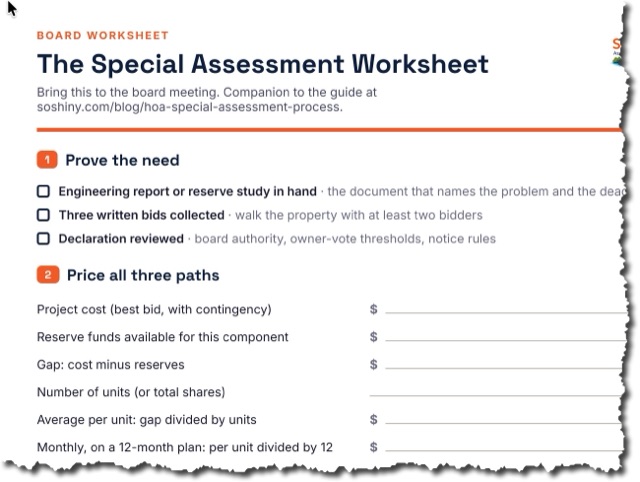
Yep. So Shiny Sheet attacks that problem before the meeting even starts. It puts the quorum math on one single line, lists the six legal requirements every proxy form needs to be valid, and provides a structured chase plan. Aaron Powell Which is brilliant. Yeah. It shifts the board from panicking in the parking lot to systematically securing the legal foundation of the meeting days in advance. Exactly. They also offer tools like the annual budget worksheet, a first-hour emergency sheet for locating shutoff valves and contacting 24-hour vendors, a
17:33
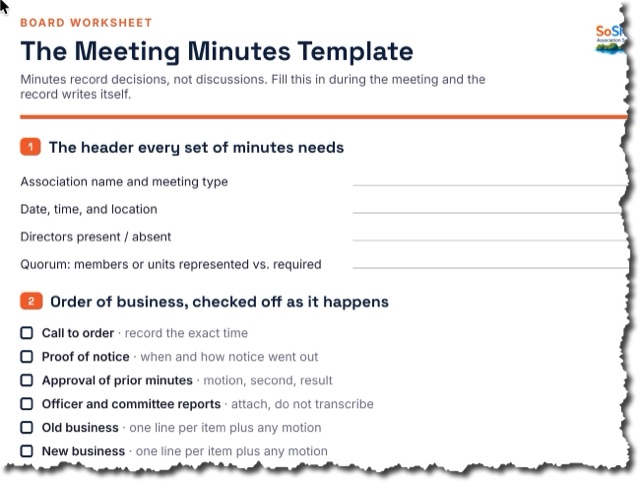
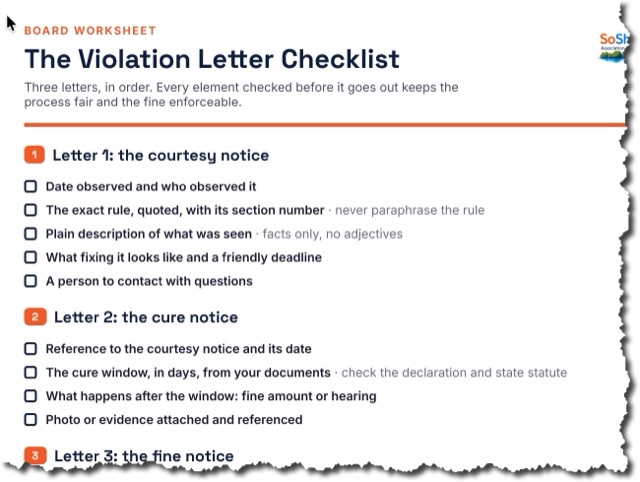
late dues timeline, and a named storm deductible math sheet that boards can print out before a hurricane hits. Those printables are great. But beyond the printable guides, the sheer volume of their digital infrastructure is massive. Oh yeah. They offer 56 different apps covering every aspect of community management. And we are talking about general ledgers and bank reconciliation for the money side, full governance tracking for meetings and rules violations, all the way through to communication and website building. The meeting minutes template they provide really illustrates how
18:04
the software directly supports that parliamentary engine we discussed earlier. Aaron Powell How so? Well, it is structured with the required header and the exact legal order of business. But more importantly, it has a motions log built directly into the interface. Oh nice. So as the board moves through the four-stroke engine of the motion loop, the secretary simply fills in the fields. The software organizes the intake, compression, and exhaust in real time, creating a pristine legal record without anyone having to decipher scribbled notes three weeks later.
18:34
Aaron Powell That is so convenient. But um introducing this level of comprehensive software into local governance raises an interesting tension for me. Aaron Powell What do you mean? Aaron Powell Well, the So Shiny Guide explicitly states software is not a parliamentarian. If an algorithm is calculating the quorum, tracking the budget, and formatting the minutes, does all this technology run the risk of replacing the human element of leadership? Aaron Powell I think that fear stems from a misunderstanding of what actually drains a volunteer board's energy. Aaron
19:03
Powell Okay. Tell me more about that. Aaron Powell Boards do not burn out because they spend too much time engaged in rigorous democratic debate about community improvements. They burn out from the logistical friction. Aaron Powell The busy work. Exactly. Tracking down proxies by hand, doing the mathematical gymnastics of a two-thirds vote, agonizing over the formatting of legal minutes. That is what exhausts people. Aaron Powell So the software doesn't replace the leadership, it removes the friction. Aaron Powell By automating the minutiae, the technology preserves the board's
19:32
mental bandwidth. It gives volunteers the time and the psychological space to actually engage in the substantive, sometimes messy debates that Roberts Rules was engineered to protect in the first place. Aaron Powell That makes total sense. The software ensures the engine is oiled and has fuel, but the human beings are still firmly in the driver's seat making the choices. Exactly. So bringing this all together for you listening, the dense, intimidating rule book of Robert's Rules is ultimately just a shared playbook for fairness. That's the best way
20:04
to look at it. It is engineered to respect your time, protect your voice, and keep the community's business legally sound. And when you pair that timeless 19th century philosophy with modern friction-reducing tools like So Shiny Software, governance transforms from an exhausting chore into a highly effective system. And whether you are currently wielding the gavel as the board president or you are attending your very first meeting as an observer, understanding these mechanics gives you power. It really does. Grasping the stakes of a quorum, the friction of
20:35
the motion loop, and the math behind calling the question allows you to cut through all the noise. It ensures that when you do speak, you leverage the machinery to make your voice actually count. Aaron Powell Which leaves us with a final thought to mull over as the landscape of how we gather continues to shift. Right. While reviewing the official Roberts Rules website, we noticed they recently had to issue official interpretations, specifically for conducting electronic meetings due to the pandemic. Our tools are rapidly evolving from physical
21:06
wooden gavels to Zoom rooms to comprehensive digital platforms. Aaron Powell The landscape is definitely changing. So as we look to the future, you have to wonder, will artificial intelligence eventually act as our real-time, automated parliamentarian? Will NAI politely mute us when we drift off topic or instantly calculate the legitimacy of a complex amendment? Aaron Powell That is a wild thought. Aaron Powell Or no matter how advanced the technology gets, will we always need that uniquely human, slightly messy right to jump up, interrupt the room, and
21:40
shout, point of order? Something to think about the next time you find yourself in a chaotic meeting. Thanks for joining us on this deep dive. We'll catch you next time. Next time, we cover the snowbird phenomenon having to deal with empty units, absentee owner requests, deliveries, and dealing with unit emergencies. And don't forget, if this podcast helped you or your board, give us a thumbs up wherever you listen to this podcast.